
Teaching Our Kids to Be Entrepreneurs & Learning Important Life & Business Skills
If they say the future belongs to the kids, it’s never more apparent than in the way that we need to look at what our kids are learning and how they are participating in the world today. From the lessons we teach them in school and at home to the opportunities they are given, “our children,” to quote the great Whitney Houston, “are our future. Teach them well to let them lead the way.”
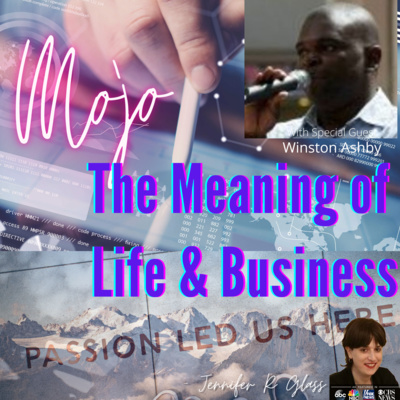
In this episode, Jennifer speaks with Winston Ashby about his unique way to help the kids in the Santa Clara, CA area learn more about the entrepreneurial journey and helping them get a leg up on life through action. To quote Winston: “Here’s the changes I want to see in my community and let them be the voices of that change and lead that change and galvanize their community. Because once they learn anything, they’re learning business skills, they’re learning leadership skills.”

MOJO: The Meaning of Life & Business explores where business growth and the human side of business intersect. Host Jennifer R Glass talks with entrepreneurs, business leaders and experts about entrepreneurship, leadership, marketing, sales, systems, careers, AI, personal development and the decisions behind success. Through candid conversations and practical insights, discover what makes people tick, what makes businesses work, and what it takes to build a successful business and meaningful life.
If they say the future belongs to the kids, it’s never more apparent than in the way that we need to look at what our kids are learning and how they are participating in the world today. From the lessons we teach them in school and at home to the opportunities they are given, “our children,” to quote the great Whitney Houston, “are our future. Teach them well to let them lead the way.”
In this episode, Jennifer speaks with Winston Ashby about his unique way to help the kids in the Santa Clara, CA area learn more about the entrepreneurial journey and helping them get a leg up on life through action. To quote Winston: “Here’s the changes I want to see in my community and let them be the voices of that change and lead that change and galvanize their community. Because once they learn anything, they’re learning business skills, they’re learning leadership skills.”
About Winston: Winston Ashby is a native of Providence, Rhode Island; a single parent, African American leader of a nonprofit organization who lives in the community that he serves, Ashby raised 2 sons and while experiencing disparities for him, his children, and other families of color in Santa Clara County, Mr. Ashby stressed that youth need to be provided the opportunity to have their voices heard, be prepared to deal with conflict, feel like they are safe and valued by their community.
Winston still leads activities for Oakland youth and partners with organizations such as the National Federation of Teachers Entrepreneur Education.
Connect with Winston on LinkedIn, Facebook, Instagram and on the web at https://partiprogram.com/
Transcript (auto-generated; may contain errors):
Speaker 1 (00:01)
Hello and welcome to another episode of “MOJO: The Meaning of Life & Business.”
(00:05)
On today’s program, we are going to be talking about entrepreneurship, but as it relates to our youth and how our youth are being taught to be entrepreneurs in their own right and not just graduating from school and going out to get a job, all too often we are trained in school just to go and get that nine to six job, but we’re not really taught to be entrepreneurs. And so my guest today is going to be telling us all about his program and ways that he is working with aspiring entrepreneurs who are our kids that are wanting to become entrepreneurs in their own right. But before I bring our guest in, let me tell you a little bit about our guests. So our guest is a native of Providence, Rhode Island. His name is Winston Ashby, and he is a single parent African American leader of a nonprofit organization who lives in a community he serves. Ashbury raised two sons, and while experiencing disparities for him, his children and other families of color in Santa Clara County, Mr. Ashby stressed that youth needs to be provided the opportunity to have their voices heard, be prepared to deal with conflict, feel like they’re safe and valued by their community.
Speaker 1 (01:26)
Winston still leads activities for Oakland youth and partners with organizations such as the National Federation of Teachers, Entrepreneur Education. Winston, thank you so much for being here.
Speaker 2 (01:38)
Good morning or good day wherever you’re at. Thank you for allowing me to engage in you and a beautiful conversation about entrepreneurship and supporting young people.
Speaker 1 (01:51)
Absolutely. And thank you for having this conversation with me. So, Winston, let me ask you, when it comes to our youth and teaching them entrepreneurship, what made you decide that this is what you wanted to do?
Speaker 2 (02:12)
Well, and this is going to be a very thorough question. When I was in high school, I played football. I was on a football team. I was very good. And I was also in the music program at my school and very active and engaged in Church. I was in a Church choir. We had a youth leadership program at our Church. I was involved with that. And I also had the opportunity to speak at the city of San Jose Mayor’s Youth Leadership Conference. It was the first one. Tom McKinley was the Mayor at the time. And from all those opportunities or involvement or engagement as a young person, I was privileged to be invited to get involved with community activities, to be invited to serve on committees like Quanza June, which are historic African American cultural activities. But I was also invited to use my voice to share opportunities in my community. And as privileged as I thought I was after I graduated from high school, I was like, I know so many people. No one came back to tell me what I did right or what I did wrong or what they’re doing right or what they did wrong or things maybe they haven’t thought of.
Speaker 2 (04:02)
So I said, I need to find a way to be able to do that for young people in my community. And so that was always my mindset going into College. And then when I went to College, I did not receive any help or financial support from family members. How to pay for myself to go to College. And I said, I don’t want to take out a loan. So I had three jobs. So navigating three jobs as a College student attending classes. I joined the fraternity, Five Beta Student Fraternity Incorporated. We just had our anniversary on January 9. So shouts out to Five Beta Sigma. I was able to connect in different networks and have conversations and engage people and be able to support people I worked with, people I went to school with and people that were in my community. So being able to build that network gave me the opportunity to use the skills I was learning in College and the life skills I learned when I was in high school to be a transformational leader. And kids in the community would always ask me for support or would always ask my fraternity for support for the companies I work for for support.
Speaker 2 (05:25)
And I said, I need make this a regular thing and support people. I did not know how to get paid. That was my dilemma. I did not know my value. I did not know my worth. We didn’t have the Internet in those days. So I couldn’t do a Google search and say, how much should I get paid? Or how much someone who does what I do get paid. And I consider myself to be a connector. That was kind of my thing. And then a lady named Karen Seals with the program called Friday Night Live said, you need to put a value for your gift. In Winston, you have a gift and you need to be able to put a value on that with the price so people will respect and acknowledge and honor your gift. And that’s how I first had the mindset to start an organization. And then Karen followed up by saying, you need to be able to provide people something that doesn’t sound like medicine. If you want to reach young people, it can’t sound like medicine. So we created the Parti Parti Party program, which stands for Positive Alternative Recreation Team Billing and Impacting Programs.
Speaker 2 (06:49)
That’s a synopsis of a long story.
Speaker 1 (06:54)
Sounds good. And one of the things that when you are saying in terms of not knowing what to charge and not knowing how to get paid, it made me remember one of my mentors statements where he said, you have to teach them how to give you money. Too often we go about and we don’t tell our prospective clients how they can actually work with us and how they can give us money for the talent that we are or the work that we are doing for them. And so it really does come down to how do you make that happen? So let’s talk about the program that you do have, the party program and how it is there to shape our youth. So you’re going to the schools, you’re teaching these kids. And when we were in the green room, you had mentioned that some of the people that you’re working with, their ages twelve to 20, if I remember correctly from what you were saying. So help me understand more. And our listeners, what exactly is it that you are going into? The schools are doing programs for these kids that you are doing that is helping shift their mindset and perspective about being an entrepreneur in today’s marketplace.
Speaker 2 (08:33)
So as a Parti program, our focus is youth development. We have a cultural, artistic engagement ranking with the federal government. But we’re really an opportunity or platform for young people to come together. Remember I said I was in a fraternity being able to come together and build your network. We always tell young people your net worth is contingent on your network. You need to be able to align with people who have the same mindset, mentality and energy that you are driving and striving for. And so the party program, we have four different programs. We have a high impact that goes with life skills. Being able to know who you are as an individual, know your strength and know the things that you need to work on and grow with is going to help you not just in business but in personal relationships. Our next program is our fusion dance music arts program. And that’s telling young people, hey, you know what, if you’re a singer, if you’re a model, we do a lot of fashion shows and no one wants to give you the stage. They say you’re too short or you’re not industry standard or you don’t like your style of music.
Speaker 2 (10:13)
Being able to build your own stage, being able to teach you business skills to where, okay, I can go to a park, get a permit, I can rent space here. I can tell people that I’ll bring people to their business if they give me five minutes or ten minutes to do a poem or to tell my story or to show my art, teaching them those business mindsets instead of saying nobody will hire me, nobody will want to work with me. And that’s a lot. I hear young people say that a lot. Nobody will. Nobody will. And being able to help them change their mindset and give them platform to connect with other young people who have either the same or shared or different talents so they can learn how to partner and work in cohorts or build cohorts. Collaboration is some of the activities that we do in engagement and is especially exemplified in our leadership mentorship program. And that is engaging young people in service. So they could feel like they are owners in their communities, give them that opportunity to be able to not just volunteer for activities, but say, okay, here’s what I want to be engaged in.
Speaker 2 (11:44)
Here’s the changes I want to see in my community and let them be the voices of that change and lead that change and galvanize their community. Because once they learn anything, they’re learning business skills, they’re learning leadership skills. And then the fourth thing is everyone needs to be able to do is self-care, health, their mental health capacity. Being able to wake up to go to work on Monday knowing, oh, it’s going to be a great day. And as we talked in the green room, I had communicated there was no one in my family who said, oh, you want to be an entrepreneur, you want to start your own organization, we’re going to support you the best way we know-how. No one said that if I said go get a job, go work for somebody else, that’s how you make it. But being able to have that mental capacity and that social-emotional capacity to be able to be sustainable in love, in work, and in relationships, those are our programs.
Speaker 1 (12:58)
And those are definitely some great building blocks that you’re working with our use on. And that’s great because all of those different areas are really important. Like you were saying, to be in a position to know, how do I get away from those naysayers? Like you’re saying, these kids are always hearing nobody will, nobody will, nobody will. Or that they’re saying nobody will. And to be in a position to ignore all of those negative voices and hear the positive reinforcement coming from the party people that are working behind the scenes to really build up their self esteem, build up their mental health, like you were saying, build up all of those pieces that are going to ultimately be valuable as an entrepreneur. Because like you’re saying your net worth is tied to your network, but it’s also, it’s not just your network, it’s your relationship. Because I can have a network. And you look at many people on LinkedIn and many people on LinkedIn have a network of 15-20, 30,000 people. And when it comes to all of these different people that are in their network, how many do they actually know and have a relationship with in terms of what can you do?
Speaker 1 (14:35)
I myself have almost 10,000 1st-degree connections in my LinkedIn network and I try and have a relationship with most. Some of them I have learned are fake profiles and you’re never going to get away from those fakes. Sometimes it just happens. Other times people are connecting because they believe LinkedIn is like Facebook and they just want to build friends and they don’t realize the value of a relationship. And then other times is really how do I get down to making that relationship. And it’s like I’ve always said many times when you go out, the difference between networking, relationship working is networking is here’s my card. Let’s do lunch. Relationship working is how can I actually help you whether or not there’s something in it for me? Right. So often I have been asking people, what is your number one goal that you want to do, whether or not it’s anything that I can personally help them with? Very often they tell me it’s something dealing with a startup. They’re working on a shoestring budget and they need logos, any websites, whatever it is that they need done, I send them over to Fiverr. If you’ve got somebody that’s able to work with that, that’s great.
Speaker 1 (16:01)
Now let me bring that back to the party idea. And where you guys are as it relates to the working with the youth and teaching them in that regard, what is it that you are really hoping that they are taking away, that if you were to look at them in three to five years from now? Again, anyone that in 2016 answered that question is completely wrong because nobody thought we would be in a world like we are in from three to five years now.
Speaker 2 (16:51)
Well, there’s a few things I first want to communicate or regurgitate. What I always hear kids say, we’ve been doing this for 22 years, and I always hear kids say this as a testimony comfort zone, being able to take people out of their comfort zone and have them work on developing relationships or exploring new experiences. This year in 2022, our focus is to be able to engage young people in conversations about diversity and inclusion. Last year I went to a lot of different schools and we would bring food to the different schools of a variety of different forms of food that kids can engage in safely without fear of contracting Coburn 19. And we are very mindful of how we approach young people. We’re very mindful in being able to give them safe platforms to have a conversation and speak their truth of what was going on right now. What are they dealing with right now? And within that mindfulness and within that, making sure kids felt safe and that we were able to create a platform where they can share their voice and have equity. We kind of realize that not all schools. While they say, hey, our focus is making sure our kids are connected, they feel that same way.
Speaker 2 (19:04)
I was in school, I was never considered or identified as a leader. And so allowing young people to feel safe and to have the mindfulness to know that they have an ability to be a leader. And while you’re in school, while you’re in high school, your lived experiences while you’re at school or whether you’re in the community can help prepare you for opportunities that you may not be able to see right now. So if we continue to challenge you to get out of your comfort zone. For some people, their comfort zone is just being on their social media or on their phones, texting and tick talking, being able to challenge them to get out of that, to have conversations, to build relationships, especially now during Kovan 19, we have all these variations I’m going to call variation. And who knows what’s after that? Those kids are just thinking about those unknowns and feeling anxiety. I remember when I first wanted to start this organization and I had to deliberate, are we going to be a for profit or nonprofit organization? Just that anxiety, having that concept of how do we get started? I had to have conversations with people.
Speaker 2 (20:40)
I had not to be able I had not to be afraid to have these conversations and not to minimize who I was or my dream or my vision. This past year, this amazing gentleman, Alfredo Matthew, he’s a person who I first connected with through Nifty. He was the executive director. He launched a program for entrepreneurs in East Oakland, and he’s building his own platform. He kept getting at me, how much are you getting paid? What is the value of your work? I said, I don’t need to get paid. Yes, you do. And he has helped me and challenge me to know what my strength is and the value of my strength and to be mindful of myself and to be able to trust myself. And I think when young people have that entrepreneur mindset, they need to even do those things to gather strength, to be able to trust their gut intuition and their feelings and to align with people and cohorts that are going to help them to elevate growth and develop, because I didn’t have that at home. But sometimes you need to be able to reach outwards and connect with people who have that same mindset.
Speaker 2 (22:20)
We’re part of four Chambers of Commerces, and those are networks. But if we get two or three valuable relationships, that’s a win. And so by young people doing all these things, they’re going to create. My name is Winston, so I always believe in a win-win situation, create wins for other people and make sure that those wins turn or reflect into wins for years. Sells.
Speaker 1 (23:01)
Absolutely. And so there’s so much there that you said you talked about your own mentors and how that shaped what you’re doing. And the idea, again, of you can’t change until you get out of your own comfort zone, which is a really famous quote. It’s been set in so many different ways over the years in that idea, because it’s really true. The more that we’re staying where we are, we can’t do anything. And so we always have to push ourselves to get out there. As the great hockey player Wayne Gretzky said, you miss 100% of the shots you don’t take. And so that’s going again towards the idea that you need to step out of your comfort zone and try doing things, because if you don’t do it, you’re going to miss all the time. And so when you’re looking at your ultimate legacy, you’ve been doing this 22 years now with the Party program. Where do you see the program going from here? Right now, it’s in the East Oakland area from where you are. But do you see this going to a greater reach? Do you see this thing where it is? Where do you see the program?
Speaker 1 (24:24)
Where do you see your future in terms of what you’re doing?
Speaker 2 (24:30)
So we’re based actually in Santa Clara County. I first started doing work at Oakland Tech Nicole High School as a high school outreach coordinator for it was Cal State Harriet at the time. And being able to go to three or four different schools in Oakland, there was McClimon Fremont High School was where I first got my start. And then right after that, I got a job in the city of Dublin working with young people. And I was like, okay, you know what? The things that I’m doing in Oakland are working in Dublin. And this is an entirely different group. How we really got started in San Jose was there were three African American high school students. Guess what? February is coming up. There are three African American high school students who said, hey, you know what? February is coming up. This is 1999. We want to be able to do it’s an African form of dancing called stepping. We want to be able to do stepping at our school February rally so that African Americans COVID have representation during assembly because February is also Black History Month. And I said, no, not going to do it.
Speaker 2 (26:23)
I will teach you how to step if you’re willing to promote or present a message that can be sustainable for the rest of the school year. And you find a way to have other people have the opportunity to get involved. So we created this event called the Martin King Junior Stop the Violence event, which is actually going to be this Saturday. It’s going to be the 22nd annual. And I stopped patting myself on the back, and I began to realize over the first two or three years that young people will do pretty much anything if they see everyone else doing it. So if they are seeing their peers get involved with things that are positive, things that are safe, things that can help them grow, they’re going to gravitate, that they’re going to gravitate to that. And as I fast forward during this time of COVID-19, we’ve had a tremendous amount of young people in Texas, in New York, even in New Jersey, North Carolina, and as far as Singapore who said, Winston, we want to participate in your organization because we were one of the few organizations to continue to provide programming, and we continued it in a safe way.
Speaker 2 (28:10)
We did it through Zoom. And kids have the opportunity. Let’s do an event, let’s call it Party with Parti kids created that and we gave them the platform. And so as we transition moving forward, we have kids in Washington, we have kids in Utah, and we over the past ten plus years, we’ve been doing work in La. We’re going to continue to do that. And I am fortunate to be able to be a part of the UC Berkeley African American Executive Accelerator. So I want to be able to use that platform and those connections and those networks to be able to continue to build relationships so that we can expand our work, expand our network and expand partnerships can’t do it by ourselves. We got to be able to invest time, money, resources and partnerships. So that’s how we’ll be able to reach over 5000 young people to help them feel safe, to empower them, to teach them about entrepreneurial ship skills, through lived experiences, through actually giving them money to say, here’s your budget to do the activity that you said you wanted to see. And we started that in December. And this attraction is amazing.
Speaker 2 (29:40)
What we’re going to get money. Yes. You get money to lead your projects in your budget. So that way when you leave here, whether you decide to work for yourself or partner, create a partnership or even be a manager, director at another company, you have that entrepreneurial experience and you learn it in a safe, nurturing, mindful way.
Speaker 1 (30:14)
Absolutely. So let me ask you, have you reached out to the San Jose Sharks Foundation just because when you mentioned the San Jose region, I know that the Sharks have several different funding and grant programs and mentorship happens to be one of those that they do get involved in. There’s a lot that you might be able to get with the Sharks in terms of going there. I know the NHL in general is doing a lot with the mentorship and the kids and could be a good opportunity because again, like you’re saying, getting up on stage, reading your work, presenting your art, whatever it is, is also just like giving them the self esteem and everything to even try and perform the sports as well, because we know that a lot of our kids are motivated by sports, but they also, through sport, become entrepreneurs as well. And so there’s different ways that you can team up with different teams as well as what you’re doing. So I just thought as we’re talking, I would just throw that out there.
Speaker 2 (31:39)
So we do not receive any funding from the San Jose Sharks, and we approach them every year to try to support these young people who live in communities of economic disparities. We don’t get any money from the San Francisco 49 Ers, which is also in our community, or from the Golden State Warriors, who’s also in the San Francisco Bay Area which we serve. We do approach them. We do reach out, and sometimes we don’t get phone calls that don’t get returns. But relationships are not about what you want. Sometimes I communicated the win win situation. Even though we do not get funding from the Sharks opportunity, they’ll put our kids on guest list to attend events. They’ll inform us about opportunities. And San Francisco for now, is really great here’s opportunities for your kids. And sometimes we have to humble ourselves to say, okay and assess it. Is this valuable for my customer? And if it is, that’s still a valuable relationship. My son plays football for Washington State University. He was introduced to service when he was in elementary school. Him and his brother, they both played College football. I’m very fortunate to be able to go a lot of football games because of this.
Speaker 2 (33:22)
And service was always going to be a component because we know that as athletes, they have a privilege. And being able to align our athletes with their own entrepreneur mindset. Their brand is the sport that they play. And being able to use that brand to advocate for young people or their peers who need support, who may need help lifting up social issues, are going to help them. That when they go if they’re able to make it into College football or if they’re able to make it into professional football as an athlete, they will have that foundation from that live experience to be able to always go back and reinvest in their communities and support the future entrepreneurs because they know that road that needs to be taken and that support and that network that is needed.
Speaker 1 (34:34)
That is so true. And I completely agree with everything you were just saying. So let me ask you, Winston, as we look at wrapping up our conversation today, as we look at the next several years, there’s going to be major shifts in the workplace and the marketplace that we’re living in, not only because our youth are going to be coming into more opportunities. Technology is changing at a mind-boggling pace. You look at the last ten years and the improvements and inventions that came out are just mind-boggling. It’s really something to see how far we’ve come. And our kids are coming up with all of this technology. They’re not afraid to do anything when it comes to technology. I mean, my mom is still afraid to turn on a computer because she’s afraid of that blue screen of death. And that’s something that our kids are like, what is that? And there’s a major difference in terms of what they’re doing and what the older generation has been doing. And so there’s so much that’s there and our kids are going to have many more opportunities. They’ve got more mentors that are out there trying to give back in the community, trying to do more in terms of getting involved in different community projects and things along those lines, whereas in the past, they may not have done that.
Speaker 1 (36:18)
So my question is, where do you see the kids in the next 24 to 36 months that are graduating from your program? And what is the biggest hope that you have in terms of moving forward from there?
Speaker 2 (36:40)
So right now, what I see across the country is there are people who don’t want to work. And I am hoping that the kids that are in or entering high school. Right. Who are still going through this pandemic, come out of high school with the mindset and the knowledge of relationship building, being able to include and advocate for communities and Peoples in different groups, to be included in opportunities, to be able to have equity. And I want the kids that are in our programs and our activities now we have kids from Washington shout out to my niece, who attends Dartmouth College on the East Coast, Arima. So my own personal kids, I’m hoping that they are tackling opportunities. I am hoping that they are saying, here is my goal for this year. Here’s what I want to achieve and accomplish or overcome, and that they are connected with entrepreneurs from different Chambers of commerce, from their local community. And they’re able to engage in conversations about what is going on in real world right now so that they can shape their power base and that they can navigate skill sets or learn skill sets. That’s what we do in our organization.
Speaker 2 (38:57)
We engage young people in learning skill sets and connecting them with caring adults who are experts or experiencing their field. If you’re experiencing you’re automatically an expert to be able to help them to prepare for the future, to be able to help rebuild our communities, our economies. And so it’s more diverse and that more people through their platform they have are connected with that entrepreneurship spirit, mindset, mindfulness and philanthropy. Always giving back.
Speaker 1 (39:48)
Absolutely. And the biggest thing is giving back, because when you’re given so much, you owe it back to the people that gave you so much. So you have to pay it forward. It’s just the only right thing to do. And I’ve been teaching my kids that all along. The spirit of volunteering. As of the day of this recording, we’re looking at Parti Luther King Jr. Day coming up. And that’s a national day of service, as many people know. And it’s important to know that we have to constantly keep on giving back. And not just on these national days of service, but year-round. So many organizations need the help all year long, not just on the holidays that are out there. So, Winston, let me ask you, what is the best way for people to find out more about the party program and to stay in touch with you?
Speaker 2 (40:51)
You can find this on LinkedIn party program, Parti program. You can visit our website on there. We’re going to also communicate or you’re going to see information about our amazing funders, Silicon Valley Community Foundation, Kaiser Permanente, David Lucille Packard Foundation, Sobrado Foundation and so many other amazing foundations, companies. You’re going to hear from our young people who are giving testimonials, talking about their experiences. And you’ll find information about our programs and services. So those are various ways you can contact with us. We’re actually kicking off Martha King Junior Weekend. That’s our kick off. So we’re kicking off three months of youth led service projects. We’re giving kids all across the Bay Area budgets to do activities. And then it culminates in April in La with the South La event. So if there’s something that you want to see in your community, something similar to this, or you want to know how can we do a softer Violence event, which our events will feature a fashion show and talent show. So people love fashion. They migrate to that. They migrate to music, art. We have art showcases, and it just culminates in La. Come join us in La or let us partner with you to do something somewhere in your own community to empower young people.
Speaker 1 (42:39)
Thank you so much, Winston. And it’s really important as you’re listening to this program. If you’re not involved in a program for youth, think about what you can possibly be doing to teach the kids about being an entrepreneur. Teach them the values that you yourself have been gaining. A lot of us have had incredible mentors that have helped us through our own entrepreneurial journey. It’s really important to think, though, how do I give back? How do I pay it forward? I have had many great mentors. The Small Business Development Center is one of those that have done so much for me and my business, as well as I’m giving back through the Small Business Development Center as well. And there are other mentors, of course, also. But you want to find how can I get involved and do more? If you’re in the Bay Area, you may want to reach out to Winston because he may have opportunities for you to get more involved. If you’re not in the Bay Area or in the L. A. Area in California, there are other programs that are out there that may be beneficial for you to find out how you can also get involved.
Speaker 1 (44:11)
But the most important thing is do something. You want to be growing your business, of course, because if we don’t have money to put food on our table, we can’t give back. But once you do have those funds, think about what you can do to really be paying it forward to be getting more involved in the community. The more that you can be out there, the more that you can be helping our kids learn more, the better it’s ultimately going to be for you. On that note, this has been another episode of “MOJO: The Meaning of Life & Business.”
Speaker 2 (44:50)
Jennifer, thank you for having this platform available. Thank you for investing in the entrepreneurship spirit mindset and to equipping young people old people like myself with tools needed and resources. Thank you for being a platform for change.
Speaker 1 (45:16)
Thank you so much, Winston. And on that note, I don’t know if there’s any other better way to end this this has been another episode of “MOJO: The Meaning of Life & Business” and here’s to your success.
About Winston: Winston Ashby is a native of Providence, Rhode Island; a single parent, African American leader of a nonprofit organization who lives in the community that he serves, Ashby raised 2 sons and while experiencing disparities for him, his children, and other families of color in Santa Clara County, Mr. Ashby stressed that youth need to be provided the opportunity to have their voices heard, be prepared to deal with conflict, feel like they are safe and valued by their community.
Winston still leads activities for Oakland youth and partners with organizations such as the National Federation of Teachers Entrepreneur Education.
Connect with Winston on LinkedIn, Facebook, Instagram and on the web at https://partiprogram.com/